
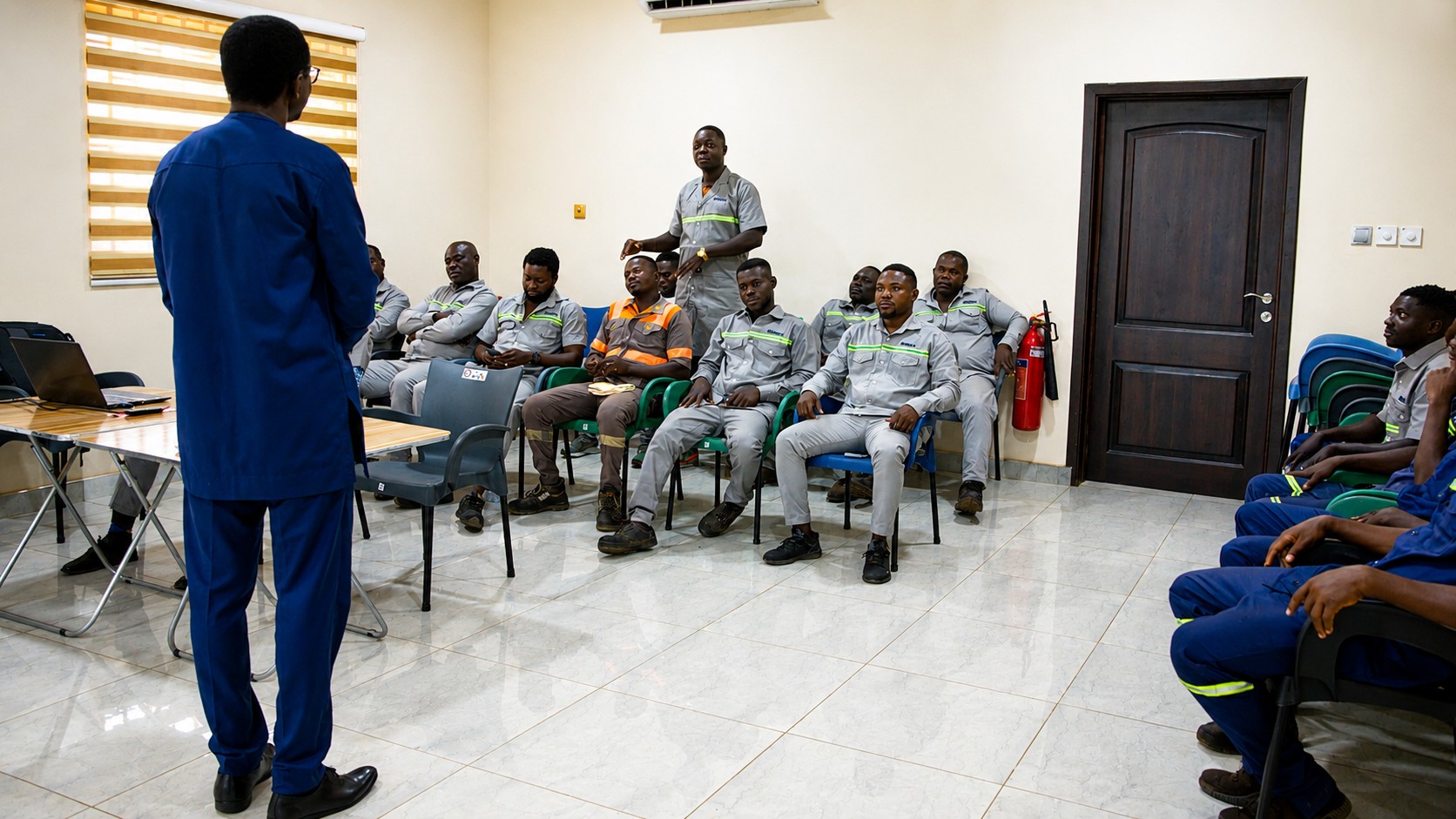
Reliable, Responsible, Safe: The Importance of Incident-Free Petroleum Logistics in Ghana
Mondat Transport Ghana Limited
Petroleum logistics is a critical backbone of Ghana’s energy and industrial ecosystem. Every movement of fuel from depots to service stations, manufacturing plants, and distribution hubs directly influences economic continuity, transport reliability, and national productivity. In such a system, safety is not an operational department—it is the condition that determines whether the entire supply chain remains functional.
Incident-free petroleum logistics therefore represents more than operational excellence; it represents national infrastructure stability.
1. Reliability as a System Output, Not an Intention
Reliability in petroleum transport is often misunderstood as punctual delivery. In practice, it is a systemic outcome produced by tightly controlled operations, stable fleet conditions, and predictable execution environments.
A reliable logistics system requires:
- Consistent fleet readiness and mechanical integrity
- Structured dispatch and routing discipline
- Predictable loading and delivery cycles
- Minimal operational disruption across transport chains
Without safety, reliability collapses into unpredictability.
2. Responsibility in High-Risk Energy Transport
Petroleum haulage carries inherent environmental, safety, and economic risks. Responsibility in this sector extends beyond compliance—it includes active prevention of harm to people, assets, and the environment.
Responsible operations require:
- Strict adherence to loading and discharge protocols
- Protection of product integrity during transit
- Controlled handling of hazardous materials
- Accountability across every operational stage
Responsibility is therefore a continuous operational obligation rather than a policy statement.
3. Safety as the Core Infrastructure of Logistics
Safety in petroleum transport functions as invisible infrastructure. It determines whether vehicles move without incident, whether products arrive uncontaminated, and whether supply chains remain uninterrupted.
Core safety dimensions include:
- Vehicle integrity and preventive maintenance systems
- Driver competence and operational discipline
- Interface control at depots and delivery points
- Emergency preparedness and incident containment capacity
Without this foundation, logistics systems degrade rapidly under operational pressure.
4. The Ghanaian Context: Demand, Growth, and Risk Exposure
Ghana’s growing industrial and energy demand has increased dependence on efficient fuel distribution networks. This expansion also raises exposure to transport-related risks, particularly on long-distance haulage routes and high-traffic corridors.
Key challenges include:
- Road safety variability across regions
- High dependency on road-based fuel distribution
- Increasing volume pressure on logistics operators
- Environmental sensitivity in fuel handling
These conditions make incident prevention a national economic concern, not just a corporate objective.
5. The Operational Model Behind Incident-Free Logistics
Maintaining incident-free petroleum transport requires structured operational discipline across multiple layers of control.
A robust model includes:
- Preventive maintenance of bulk road vehicles
- Structured driver training and behavioral control systems
- Continuous risk monitoring and response readiness
- Controlled loading and discharge procedures
- Strong communication between field operations and management
Each layer reduces system vulnerability and strengthens operational predictability.
6. Economic Value of Safety and Continuity
Safety failures in petroleum logistics do not remain isolated—they propagate across the supply chain. A single incident can disrupt fuel availability, increase operational costs, and affect industrial productivity.
Incident-free logistics delivers:
- Reduced operational downtime
- Lower maintenance and incident recovery costs
- Improved supply chain continuity
- Stronger client trust and contractual stability
In this sense, safety is a direct economic multiplier.
7. Mondat’s Operational Positioning
Within this environment, Mondat Transport Ghana Limited operates with a structured focus on controlled, disciplined, and safety-driven logistics execution. Its operational philosophy aligns reliability, responsibility, and safety as interdependent outcomes of the same system.
The emphasis remains on:
- Controlled fleet operations
- Structured safety enforcement
- Predictable delivery performance
- Continuous risk management integration
This alignment supports sustained service delivery across Ghana’s petroleum distribution network.
Conclusion
Incident-free petroleum logistics is not an operational luxury—it is the foundation of energy stability in Ghana. Reliability ensures continuity, responsibility ensures ethical execution, and safety ensures system survival.
When these three elements are structurally integrated, petroleum transport becomes more than movement of fuel; it becomes a disciplined system that sustains economic activity, industrial growth, and national energy security.